

What it’s really like being a puppy socialiser.
Take an adorable puppy into your home – with food, any potential vet’s bills and expenses all covered. It sounds like the perfect volunteering opportunity… But is it?
I often call being a puppy socialiser both the easiest and hardest volunteering role at TVP. While it doesn’t have the complexity of learning the law and carrying out arrests like a Special Constable, the acting chops of a role player, or the knowledge of policing history like a museum volunteer, it isn’t a role you can switch off from. Having a dog is a 24/7 commitment.
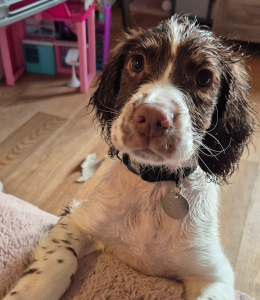
It’s the job of a puppy socialiser to take a future police dog into their home and give them the best possible foundation for a career in policing. My pup is a Spring Spaniel called Maro – and for anyone that has owned a working Springer before, they bring a whole new level of energy and an uncanny ability to find a ditch or muddy puddle anywhere they go! Even as experienced dog owner, it can be quite something to behold. Maro is working towards a role as a search dog, and his breed and personality fit that job perfectly – but our dog section will also work with other breeds suited to different roles. Regardless of the breed, it’s important they are given the right direction in order to carry out their future jobs as best they can.
My role initially involves environmental training – getting Maro used to different sights, sounds, and sensations, so that he won’t be distracted when he has a search to focus on. In practical terms, this means introducing him to different types of people, along with taking him into places that pets typically can’t go – such as schools, care homes, shops, on public transport, and even walking on different surfaces. We have a workbook to progress through, with tasks to tick off each week.
There is the also usual training you get with any new pup. House training is always a priority for any dog owner, and thankfully Maro picked that up very quickly. Crate training is another key area to consider. Police dogs must get used to sleeping in a crate, so for the first couple of nights this means you’ll have to ignore the crying from your pup until they’ve settled.
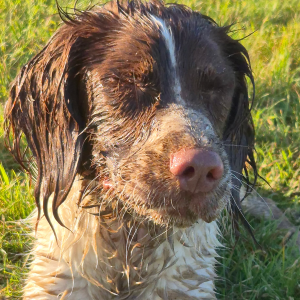
I’ll also work on helping him develop his search skills with direction from the dog section trainers. There’s a WhatsApp group with other puppy socialisers and you’re only a phone call away from speaking with one of the training team who are always on hand with great tips and advice. I’ve helped him develop his focus on a single toy (in Maro’s case, this is a Kong on a rope), then use that in different search scenarios. I might hide it in a hedgerow or long grass when we’re out on a walk, stash it away somewhere in the office, or involve my children by getting them to hide his toy around the house so that he can search for it – which he always does with his tail wagging.
Every few weeks I’ll drop him off at the training centre in Sulhamstead to spend a few days. This gives him the opportunity to train with the professionals and get used to the scents that he’ll be looking for as a search dog. It also gives me a few days of rest! He’ll return home tired, and another step along the journey towards his future career.
One of the most common questions I get is “how will you give him back,” and it’s something I had to think about when taking on the role. I’m obviously very attached to Maro – as are my family – but from the very beginning I set out the clear expectation that he’ll be going on to a vitally important job that he loves to do. With that always at the back of my mind, I’m hoping the moment will pass a lot more easily. Given how he lights up the room when he comes into the office with me, I think my work colleagues might be as sad to see him go as I will – we’ll probably have a leaving do!
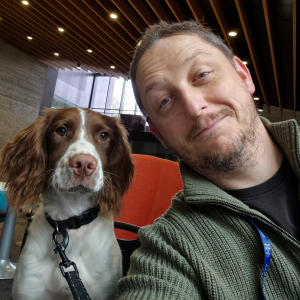
A lot of the qualities needed to be a good puppy socialiser are the same as being a good dog owner – with a few additions. First of all, you need the time, flexibility, and confidence to be able to take your dog into new environments or drop them off at the training centre. You can’t leave the pups on their own for more than four hours at a time either, so working from home or having a workplace that you can bring your pup to is a huge benefit. Having a consistent approach to training and exercise is also important, and of course you need to be physically capable of providing the exercise and stimulation that a working dog needs.
If you’re considering a volunteering role with Thames Valley Police, please join us at one of our Be the Difference volunteering events: Sunday 18 January at HQ South in Kidlington, or Saturday 7 March at our Police Training Centre in Sulhamstead.
We currently have opportunities open for Puppy Socialisers on our vacancies portal, or you can learn more about volunteering with Thames Valley Police at tvpcareers.com.
 Facebook
 Linkedin
 Instagram